Can You Appeal After Pleading Guilty?
 Moona Satti03··7 min read·Criminal Law
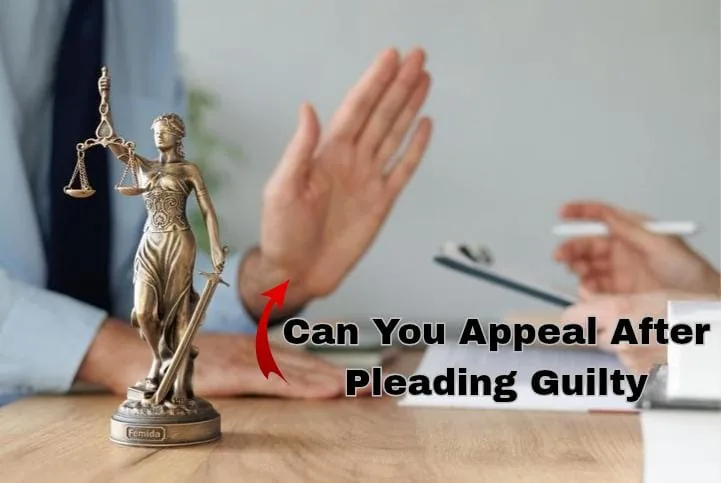
If you're wondering can you appeal after pleading guilty, the answer is yes but your options are more limited than if you went to trial. A guilty plea usually waives the right to appeal many issues, but you may still be able to challenge your sentence, the legality of your plea, or other significant legal errors.
What Happens When You Plead Guilty?

A guilty plea is a formal admission that you committed the criminal offense charged against you.
By pleading guilty, you usually give up several important constitutional rights. These include the right to a jury trial, the right to confront witnesses, the right to present a defense, and the right to require the prosecution to prove the charges beyond a reasonable doubt.
Once the court accepts the guilty plea, the criminal case generally moves to the sentencing stage. Depending on the circumstances, sentencing may occur immediately or at a later hearing.
Many guilty pleas are entered as part of a plea bargain or plea agreement, where the prosecutor agrees to reduce certain charges or recommend a particular sentence in exchange for avoiding a trial.
Because pleading guilty has serious legal consequences, judges carefully question defendants before accepting the plea. The court wants to ensure that the plea is entered knowingly, voluntarily, and with a full understanding of its consequences.
Can You Appeal After Pleading Guilty?
Yes, but there are important limitations.
Many people believe that pleading guilty completely eliminates the right to appeal. That is not entirely true.
Although a guilty plea usually prevents you from appealing issues related to your guilt, you may still have the right to challenge other parts of your case.
For example, depending on the circumstances and the laws in your jurisdiction, you may be able to appeal:
An unlawful or improper sentence.
Whether your guilty plea was voluntary.
Certain constitutional violations.
Ineffective assistance of counsel.
Specific legal errors made by the court.
The availability of an appeal depends on the facts of the case and the legal issues involved.
This is why the answer to "can you appeal after pleading guilty" is often more complex than a simple yes or no.
Does Pleading Guilty Mean You Give Up All Appeal Rights?
No.
A guilty plea usually waives the right to challenge many issues that would have been raised during a trial. Since there was no trial, there are generally no jury decisions, witness testimony, or trial rulings to review.
However, pleading guilty does not automatically eliminate every right to appeal.
For example, if the sentence imposed by the court was unlawful or exceeded the legal maximum, an appeal may still be possible.
Likewise, if the guilty plea was not entered voluntarily or the defendant did not fully understand the consequences of pleading guilty, the court may allow those issues to be reviewed.
The law recognizes that some legal errors are so significant that they deserve appellate review, even after a guilty plea has been entered.
Can You Appeal Your Sentence After Pleading Guilty?
In many cases, yes.
Appealing a sentence is often different from appealing a conviction.
A defendant who pleads guilty may still believe that the sentence imposed by the judge was legally incorrect or excessively harsh. In some situations, a defendant may also seek to challenge a criminal conviction based on significant legal errors. Depending on the circumstances, those concerns may be reviewed by an appellate court.
For example, a sentence may be challenged if:
The judge incorrectly applied sentencing laws.
The sentence exceeds the maximum penalty allowed by law.
The court relied on improper legal factors during sentencing.
A legal error affected the sentencing hearing.
However, simply being unhappy with the sentence is usually not enough to win an appeal. The defendant generally must identify a legal issue that affected the outcome.
Understanding this distinction helps explain why some appeals remain available even after a guilty plea.
What Legal Issues Can Still Be Appealed?
Although appeal rights become more limited after pleading guilty, several important legal issues may still qualify for appellate review.
One common issue is whether the guilty plea was entered knowingly and voluntarily. If the defendant did not understand the consequences of the plea or was pressured into pleading guilty, the validity of the plea itself may be questioned.
Another possible issue involves ineffective assistance of counsel. If a defense attorney failed to provide competent legal representation or important advice that affected the defendant's decision to plead guilty, this may become a basis for challenging the conviction or sentence.
Courts may also review certain constitutional violations or legal errors that occurred during the legal proceedings.
Not every issue can be appealed, but the law provides several exceptions that allow appellate courts to examine significant legal mistakes even after a guilty plea has been accepted.
Why Are Appeals Limited After a Guilty Plea?
The appeals process is designed to review legal errors, not to give defendants another opportunity to change their minds.
When someone voluntarily pleads guilty, they admit responsibility for the criminal offense and waive many of the rights that would have existed during a trial.
Because there is no trial record to examine, appellate courts have fewer issues available for review.
This helps explain why appeals after a guilty plea are generally narrower than appeals following a jury verdict.
However, the legal system also recognizes that mistakes can happen. If a guilty plea was obtained unfairly or significant legal errors occurred, appellate review may still be available to protect the defendant's constitutional rights.
How Does the Criminal Appeals Process Work?
If a defendant decides to challenge a conviction or sentence after pleading guilty, the process usually begins by filing a notice of appeal within the deadline established by law. Missing this deadline can result in losing the right to appeal, so acting promptly is important.
After the notice is filed, the case is sent to an appellate court. Unlike a trial court, an appellate court does not hear new witnesses or consider new evidence. Instead, it reviews the record from the lower court to determine whether a legal error affected the outcome of the case.
Both sides submit written legal arguments explaining their positions. In some cases, the appellate court may also hear oral arguments before reaching a decision.
The appellate judges then review the applicable law, the court record, and relevant case law before deciding the appeal. Their role is to determine whether the trial court made a significant legal mistake, not whether they would have reached a different decision.
What Is the Difference Between an Appeal and Withdrawing a Guilty Plea?
Many people confuse an appeal with a request to withdraw a guilty plea, but they are different legal procedures.
An appeal asks a higher court to review whether a legal error occurred during the original proceedings. The appellate court examines the existing record and determines whether the law was applied correctly.
A motion to withdraw a guilty plea, on the other hand, is usually filed in the trial court. Instead of asking a higher court to review legal errors, the defendant asks the original court to allow the guilty plea to be withdrawn.
A defendant may request to withdraw a guilty plea if there is a valid legal reason, such as:
The plea was not entered voluntarily.
The defendant did not understand the consequences of pleading guilty.
There was ineffective assistance of counsel.
The plea resulted from coercion or misinformation.
Although both procedures involve a guilty plea, they serve different purposes and follow different legal rules.
What Is Post-Conviction Relief?
In some situations, a defendant may seek post-conviction relief instead of filing a traditional appeal.
Post-conviction relief allows a court to review certain legal or constitutional issues that may not have been addressed during a direct appeal. It is commonly used when a defendant believes their constitutional rights were violated or that serious legal errors affected the outcome of the case.
For example, a defendant may seek post-conviction relief based on ineffective assistance of counsel, newly discovered evidence, prosecutorial misconduct, or other significant constitutional violations.
Unlike a direct appeal, post-conviction proceedings often involve different legal standards and filing requirements. The availability of this remedy depends on the laws of the jurisdiction and the specific facts of the case.
Understanding the distinction between a direct appeal and post-conviction relief can help defendants better understand their legal options after pleading guilty.
What Happens If an Appeal Is Successful?
A successful appeal does not always mean the criminal charges disappear or that the defendant is immediately released.
Instead, the appellate court may issue different types of decisions depending on the legal issue involved.
For example, the court may:
Reverse the conviction.
Vacate the sentence.
Order a new sentencing hearing.
Send the case back to the trial court for further proceedings.
Require the lower court to correct a legal error.
In some situations, the defendant may have another opportunity to negotiate with the prosecution or continue the case in the trial court.
Every appeal is unique, and the outcome depends on the specific legal issue being reviewed.
What Happens If the Appeal Is Denied?
Not every criminal appeal is successful.
If the appellate court finds that no significant legal error occurred, it may affirm the original conviction or sentence. This means the lower court's decision remains in effect.
Even if an appeal is denied, some defendants may still have other legal options available, including certain forms of post-conviction relief if permitted by law.
However, these remedies often have strict filing deadlines and specific legal requirements.
Because criminal appeals involve complex legal procedures, understanding the available options early in the process is important.
Common Misconceptions About Appealing After Pleading Guilty
Many people misunderstand what happens after a guilty plea.
One common misconception is that pleading guilty completely eliminates every appeal right. While a guilty plea limits many issues that can be challenged, defendants may still appeal certain legal errors or sentencing issues.
Another misunderstanding is that an appeal results in a completely new trial. In most cases, appellate courts review the existing court record rather than hearing witnesses or considering new evidence.
Some people also believe that every sentencing decision can be appealed. In reality, appellate courts generally review legal errors rather than simply reconsidering whether a sentence seems fair.
Finally, many assume that filing an appeal automatically delays or cancels the sentence. This is not always the case, and the effect of an appeal depends on the laws of the jurisdiction and the court's orders.
Understanding these misconceptions helps defendants develop realistic expectations about the criminal appeals process.
Frequently Asked Questions
Can you appeal after pleading guilty?
Yes, in some situations. If you're asking can you appeal after pleading guilty, the answer is that you may still have the right to appeal certain legal issues. Although a guilty plea limits many appeal rights, you may be able to challenge your sentence, the validity of the plea, or specific legal errors made during the criminal proceedings.
Can you appeal a sentence after pleading guilty?
In many cases, yes. A defendant may be able to appeal a sentence if there is a legal basis for doing so, such as an error in applying sentencing laws or a sentence that exceeds the maximum penalty allowed by law. Simply believing the sentence is unfair is generally not enough to support an appeal.
Can you appeal a plea bargain?
It depends. A defendant usually cannot appeal simply because they are unhappy with the outcome of a plea agreement. However, if the plea was not entered knowingly and voluntarily, or if there was ineffective assistance of counsel or another significant legal error, an appeal or other legal remedy may be available.
What is the difference between an appeal and withdrawing a guilty plea?
An appeal asks a higher court to review whether legal errors affected the case. A motion to withdraw a guilty plea asks the trial court to allow the defendant to take back the guilty plea before or, in some cases, after sentencing. These are separate legal procedures with different requirements.
What are common grounds for appealing after pleading guilty?
Possible grounds include an unlawful sentence, ineffective assistance of counsel, constitutional violations, judicial errors, or evidence that the guilty plea was not made knowingly and voluntarily. The specific grounds available depend on the facts of the case and the laws of the jurisdiction.
Conclusion
If you've been wondering can you appeal after pleading guilty, the answer is yes—but only in certain circumstances. While a guilty plea generally limits the issues that can be challenged, it does not always eliminate your right to seek appellate review. Depending on the facts of your case, you may still be able to appeal an unlawful sentence, challenge the validity of your guilty plea, or raise significant legal or constitutional errors.
Understanding the difference between a criminal appeal, a motion to withdraw a guilty plea, and post-conviction relief is essential because each option serves a different purpose and follows different legal procedures. Acting promptly is also important, as appeals and other post-conviction remedies are often subject to strict deadlines.
At The Law Lion, we are committed to making complex legal topics easier to understand. Explore our growing collection of legal guides for practical insights into criminal law, appeals, plea bargains, court procedures, constitutional rights, and other important legal issues to help you make informed decisions with confidence.