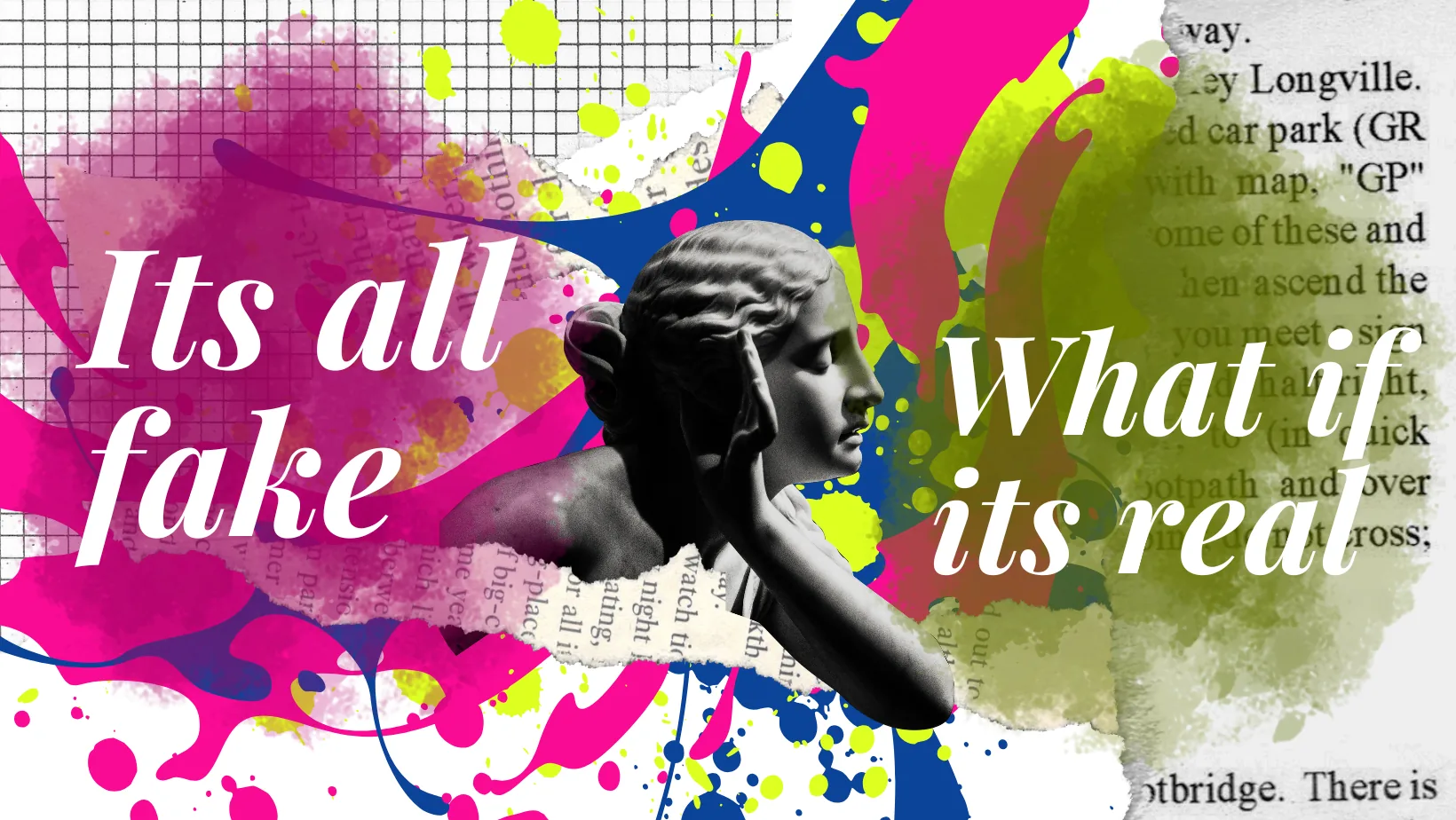
The Post-Visual Truth: Deepfake Defense and Evidentiary Integrity
 Hamas Ur Rehman··12 min read·Legal Tech
The year 2026 has officially ushered in the era of "Post-Visual Truth." In a world where high-fidelity deepfakes can be generated in seconds via edge-computing devices, the legal community is facing a crisis of authenticity that threatens the very foundation of the adversarial system. From fabricated board meeting recordings used in hostile takeovers to "synthetic" video evidence in high-stakes matrimonial disputes, the judiciary is being tested by a flood of AI-generated misinformation. Today, the fundamental rule of evidence has undergone a seismic shift: seeing is no longer believing.
1. The Global Regulatory Response: The 2026 IT Rule Amendments
The most significant legal intervention this decade is the 2026 Amendment to the Information Technology Rules, which became fully enforceable on February 20, 2026. These rules represent a global benchmark in content governance, specifically targeting "Synthetically Generated Information" (SGI). For the first time, the law distinguishes between "creative AI" and "deceptive SGI," imposing a draconian three-hour window for digital intermediaries and legal entities to flag or remove harmful deepfakes once reported.
For litigators, this "rapid-response" legal landscape means that the luxury of time has vanished. If a deepfake targeting a corporate client goes viral, the legal team has less than 180 minutes to authenticate the content, draft a takedown notice, and coordinate with platforms. Failure to act within this window can lead to "secondary liability" for the firm or the client, effectively making the lawyer a first responder in a digital firestorm.
2. The Anatomy of a Modern Deepfake: SGI vs. Reality
To defend against synthetic lies, one must understand how they are built. In 2026, deepfakes have evolved beyond simple "face-swaps." We now deal with Diffusion-Based Temporal Consistency, where AI can generate entirely new video sequences that maintain perfect lighting and shadows across frames.
Forensic experts now look for "micro-expressions" and "biometric inconsistencies" that even the most advanced GANs (Generative Adversarial Networks) struggle to replicate. These include irregular blood flow patterns in the face (photoplethysmography) and unnatural eye-movement saccades. However, as AI models begin to simulate these biological traits, the "burden of proof" is shifting. In many jurisdictions, the mere possibility of a deepfake is now enough to trigger an evidentiary hearing, potentially derailing cases for months.
"In a world of synthetic lies, the truth needs a digital guardian. In 2026, a lawyer without an AI verification partner is like a surgeon operating without an X-ray."
3. Law Lion AI: Engineering the Digital Guardian
This is where Law Lion AI redefines the legal tech stack. We built Law Lion AI to do more than just research statutes; it acts as an evidentiary watchdog. By integrating specialized deepfake detection protocols directly into the legal workflow, Law Lion AI helps teams analyze "digital footprints" against known synthetic signatures.
Unlike general-purpose bots like ChatGPT—which often lack the technical depth to analyze file metadata or recognize "noise patterns" in synthetic audio—Law Lion AI is anchored to a Retrieval-Augmented Generation (RAG) framework that cross-references emerging forensic standards in real-time. We provide the technical clarity required to challenge the admissibility of SGI before it can sway a jury.
4. The New "Chain of Provenance": C2PA and Beyond
The traditional "Chain of Custody" is being replaced by the "Chain of Provenance." In 2026, the legal industry is adopting the C2PA (Coalition for Content Provenance and Authenticity) standard. This protocol embeds cryptographically secure metadata into files at the moment of creation, documenting exactly when, where, and how a piece of media was captured.
Law Lion AI acts as a validator for these credentials. Our interface allows litigators to upload evidence and instantly receive a "Provenance Report." If a file lacks a valid C2PA manifest or shows signs of "latent disclosure" tampering, Law Lion AI flags it as "High Risk SGI," providing the lawyer with the specific technical grounds needed to file a motion to suppress.
5. Strategic Litigation: Challenging Synthetic Evidence
When faced with potentially synthetic evidence, the 2026 litigator must follow a three-step protocol:
- Immediate Preservation: Use Law Lion AI to generate a hash-verified snapshot of the evidence and its surrounding metadata.
- Forensic Triage: Run the evidence through Law Lion’s detection engine to identify "temporal artifacts" or audio-visual desyncing.
- Judicial Education: Use Law Lion’s "Brief Builder" to translate complex forensic findings into plain-language arguments that explain why the evidence is likely synthetic.
6. The Reputational Risk: Corporate Defense and Monitoring
For global firms, the threat of deepfakes isn't just a courtroom issue; it's a 24/7 reputational battle. Bad actors are using AI-generated "CEO statements" to manipulate stock prices or trigger social unrest. Under the 2026 IT Rules, the window to stop these attacks is closing.
Law Lion AI offers Active Monitoring capabilities. By scanning public datasets and social platforms for synthetic mentions of high-profile clients, our AI provides the "Early Warning" system necessary to meet the 3-hour takedown window. We bridge the gap between "detecting" a lie and "legally disproving" it before it can cause irreparable harm.
7. Conclusion: Maintaining the Sanctity of the Record
The integrity of the judicial record is the bedrock of Western and South Asian justice systems alike. When the tools of deception become sophisticated enough to fool the human eye, the tools of defense must become superior. Law Lion AI is committed to ensuring that in the algorithmic age, the truth remains accessible, verifiable, and absolute.
We are no longer just fighting for a "win" in court; we are fighting for the survival of the truth itself. As we move further into 2026, the question for every law firm is simple: Are you still relying on your eyes, or are you protected by the Lion?
Protect your case from synthetic deception. Join the frontline of evidentiary integrity at thelawlion.com/chat.