
State of Arizona v. Ronald Bruce Bigger: Complete Legal Case Brief
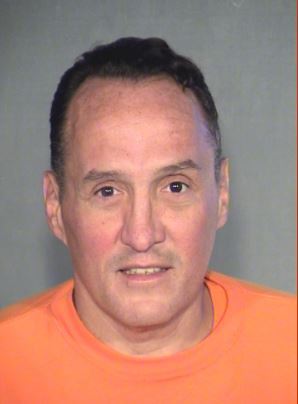
The case of State of Arizona v. Ronald Bruce Bigger is a landmark Arizona murder-for-hire prosecution arising from one of the most disturbing episodes of professional jealousy in modern American criminal history. At its heart, the case concerns the cold-blooded stabbing of a well-loved pediatric eye surgeon by a hired killer, orchestrated by a fellow physician whose career had unraveled through drug addiction, federal criminal charges, and an increasingly irrational obsession with a colleague. The case has generated years of post-conviction litigation on cutting-edge questions of DNA forensic science, ineffective assistance of counsel, and constitutional procedural rights, making it legally significant far beyond the grim facts of the murder itself.
Case Overview at a Glance
| Primary Case Name | State of Arizona v. Ronald Bruce Bigger |
|---|---|
| Pima County Superior Court | Case No. CR-20043995-002 |
| Related Case | State of Arizona v. Bradley Alan Schwartz, No. CR20043995 (Schwartz tried separately) |
| Court of Appeals (2011) | 2 CA-CR 2007-0244; Arizona Court of Appeals, Division Two |
| Arizona Supreme Court | CR-20-0383-PR (decided 2021) |
| Most Recent Ruling | No. 2 CA-CR 2025-0035-PR (Arizona Court of Appeals, February 5, 2026) |
| Crime | First-degree murder and conspiracy to commit first-degree murder |
| Victim | Dr. David Brian Stidham, pediatric ophthalmologist |
| Date of Murder | October 5, 2004 |
| Location | Catalina Foothills, Tucson, Arizona |
| Trial Date | February to May 2007 |
| Verdict | Guilty on both counts of first-degree murder and conspiracy |
| Sentence | Two consecutive life sentences without possibility of release |
| Trial Judge | The Honorable J. Alan Goodwin, Pima County Superior Court |
| Prosecution | Pinal County Attorney Brad Miller; Deputy County Attorneys Sylvia Lafferty and Richard Platt |
| Defense Counsel (Trial) | Jill Thorpe |
| Defense Counsel (Appeals) | David J. Euchner, Pima County Public Defender’s Office |
The Victim: Dr. David Brian Stidham
Dr. David Brian Stidham was a 37-year-old pediatric ophthalmologist with a reputation for extraordinary dedication to his young patients. A Harvard Medical School graduate who completed residency training at the University of Texas Southwestern Medical School and a fellowship in pediatric ophthalmology at Indiana University, Stidham was regarded as one of Tucson’s finest pediatric eye specialists. Colleagues and patients alike described his commitment as exceptional. Parents of children he treated spoke of a physician who followed up obsessively on his patients’ progress and who treated families with warmth and care that went far beyond ordinary professional duty.
In 2001, Stidham answered a trade journal advertisement placed by Dr. Bradley Schwartz, a fellow pediatric ophthalmologist who operated Arizona Specialty Eye Care in Tucson. Stidham joined Schwartz’s practice in November 2001, intending to assist with Schwartz’s growing pediatric caseload and eventually assume responsibility for that portion of the practice. The professional relationship that began with promise would ultimately cost Stidham his life.
The Orchestrator: Dr. Bradley Alan Schwartz
Bradley Alan Schwartz was born in Brooklyn, New York in 1965. A graduate of the University of Rochester School of Medicine in 1991, he established himself in Tucson in the late 1990s and built what was described as a thriving ophthalmology practice, becoming recognized as a leading pediatric ophthalmologist in southern Arizona. By the early 2000s, however, Schwartz’s personal life and professional conduct had descended into serious dysfunction.
Federal Drug Fraud Charges
In December 2001, the same month Stidham joined his practice, the DEA raided Schwartz’s office and a federal grand jury indicted him on 77 counts of illegally obtaining prescription medications through fraudulent means. In September 2002, Schwartz and his then-girlfriend Lourdes Lopez, a Pima County deputy attorney, were indicted on federal drug-fraud charges. The Arizona Medical Board temporarily suspended Schwartz’s medical license. When his license was eventually reinstated in August 2003, the board placed him on five years’ probation and barred him from prescribing narcotics, requiring daily check-ins and random drug testing.
The Unraveling Professional Relationship
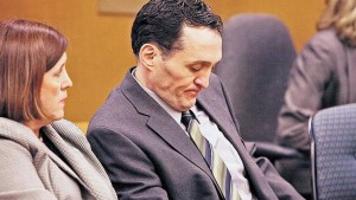
When Schwartz’s medical license was suspended and he entered drug rehabilitation, Stidham effectively became the primary treating physician for Arizona Specialty Eye Care’s pediatric patients. Many of Schwartz’s patients remained with Stidham, whom they had come to trust. When Stidham eventually left the practice and established his own independent office, Arizona Eye Specialists, he took a substantial patient base with him. To Schwartz, this felt like a profound betrayal by a man who had benefited from Schwartz’s practice only to leave and compete directly against him.
Investigators later learned that Schwartz had spoken openly to his girlfriends about his intense hatred of Stidham and had fantasized about various ways to harm him, including planting child pornography on Stidham’s computer and attacking him with acid. His defense attorney later attributed these statements to Schwartz’s drug-addled state and a desire to impress the women he was dating. At some point, however, the fantasies became a plan.
The Murder: October 5, 2004
The Hiring of Ronald Bruce Bigger
Ronald Bruce Bigger was a 39-year-old former medical supplies salesman who had relocated to Arizona from Indiana. The son of a retired police officer, Bigger had connected with Schwartz through circumstances that remain disputed: some accounts place their meeting at a Narcotics Anonymous gathering, others at Schwartz’s medical practice. Schwartz allegedly paid Bigger 10,000 dollars to kill Stidham, staging the murder to appear as a robbery or carjacking.
The Night of the Murder
On the evening of October 5, 2004, Dr. Stidham left his First Avenue medical office in the Catalina Foothills area of Tucson. As he reached his 1992 white Lexus SC400 in the parking lot outside his office, placing a pizza on the roof of the car while he unlocked the door, Bigger attacked him. Stidham was stabbed 15 times and suffered a skull fracture. The ferocity of the assault indicated a premeditated attack rather than a spontaneous confrontation. Bigger then drove off in Stidham’s Lexus to stage the scene as a carjacking, abandoning the vehicle at an apartment complex more than six miles away. Investigators noted immediately that Stidham’s wallet, containing cash, was left behind, which was inconsistent with a robbery or carjacking motive.
The Restaurant Confirmation
That same evening, Schwartz had arranged to be publicly visible at a Thai restaurant in Tucson, dining with his girlfriend Lisa Goldberg to establish an alibi. In one of the most damaging pieces of evidence against both men, Schwartz received a phone call from Bigger during dinner, and Goldberg later testified that Schwartz had Bigger come to the restaurant briefly and sit at their table to confirm that the killing had been carried out. Schwartz reportedly asked Bigger how the scrubs worked out, referring to the medical scrubs Bigger had worn to blend into the medical-office environment near Stidham’s practice. This visit created a direct electronic and eyewitness record linking the two men on the night of the murder.
The Investigation
Investigators from the Pima County Sheriff’s Department identified Bradley Schwartz as the primary suspect within 24 hours of the murder. Stidham’s widow, Daphne, told detectives that her husband had an enemy in Dr. Schwartz. The investigation proceeded rapidly on multiple fronts.
Lourdes Lopez: The Critical Witness
The breakthrough in connecting Schwartz to Bigger came through Lourdes Lopez, Schwartz’s former girlfriend and a Pima County deputy attorney with whom he had a long and complicated relationship. Lopez went to investigators and disclosed that Schwartz had told her he intended to hire a hitman to kill Stidham and stage the murder as a carjacking. This tip directed investigators toward Bigger. The case also generated significant institutional scandal: it emerged that Lopez may have told then-prosecutor Paul Skitzki about Schwartz’s alleged murder plot before the killing occurred. Pima County Attorney Barbara LaWall fired Skitzki for failing to report this information and suspended three other attorneys who had learned of Lopez’s account after the murder but before the arrests.
Phone Records and Electronic Evidence
Phone records produced devastating evidence against both defendants. Records showed multiple calls between Schwartz’s cell phone and Bigger in the days leading up to the murder, including calls on the day of the killing. One intercepted call captured Bigger repeatedly asking Schwartz, where is my money, establishing the financial relationship and confirming Bigger’s role. The phone records established a clear pattern of escalating communication between the two men in the period leading up to the murder.
Arrests
Both Schwartz and Bigger were arrested and charged with conspiracy to commit first-degree murder. Schwartz was also charged with the murder itself. Facing separate trials, Schwartz was tried first in February 2006 and convicted of conspiracy to commit first-degree murder, receiving a sentence of life with the possibility of release after 25 years. Bigger was tried separately beginning in February 2007 on charges of both first-degree murder and conspiracy to commit first-degree murder.
Ronald Bruce Bigger’s Trial: February to May 2007
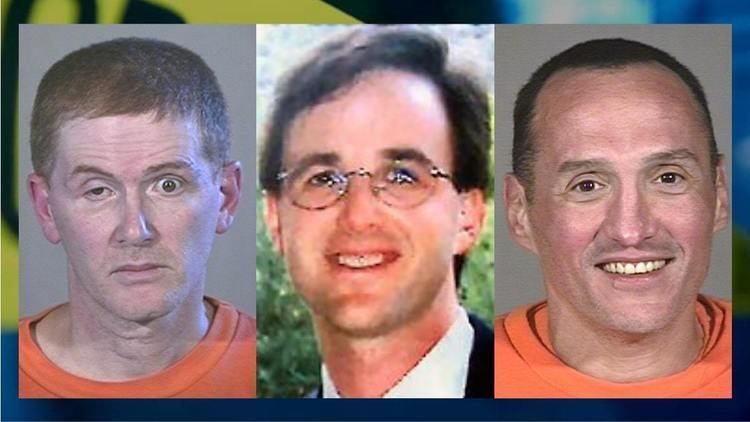
The Prosecution’s Case
Prosecutors Sylvia Lafferty and Richard Platt built a case around several categories of evidence. Phone records established the pattern of calls between Schwartz and Bigger. Witness testimony placed Bigger near Stidham’s office around the time of the murder, with witnesses describing a man in medical scrubs in the area. Lisa Goldberg testified about Schwartz’s phone call during dinner and Bigger’s brief appearance at their table, including the inquiry about how the scrubs worked out. DNA evidence was also introduced, centering on a mixed DNA sample designated LX39 recovered from evidence at the crime scene that the prosecution argued showed a genetic profile consistent with Bigger as one of the contributors.
The Defense: Alibi and DNA Challenges
Defense attorney Jill Thorpe challenged the prosecution’s case on two primary grounds. First, the defense argued that Bigger had an alibi: a witness who had seen him at a restaurant near the time of the murder, which the defense argued placed him at the restaurant during the likely period when Stidham was killed. The victim’s office alarm was activated at 7:26 p.m., and Bigger reportedly called a number at 7:46 p.m. from a nearby pay phone. However, the prosecution effectively countered this alibi: the alibi witness could not recall precisely when Bigger arrived or when he departed, and phone records showed that Bigger’s 7:46 p.m. call was not to a cab company as initially suggested but rather to Schwartz himself, the man later convicted of hiring Bigger to commit the murder.
The defense also vigorously contested the DNA evidence involving sample LX39. Defense experts challenged the probability analyses underpinning the prosecution’s DNA testimony, arguing that the statistical methods used were not yet generally accepted in the relevant scientific community under the Frye standard, which Arizona courts apply to determine the admissibility of scientific evidence. The trial court rejected this challenge and admitted the DNA evidence.
Change of Venue Motion
Bigger also sought a change of venue, arguing that extensive pretrial publicity in the Tucson media market had made it impossible for him to receive a fair trial in Pima County. The case had attracted significant local, national, and international media coverage, including a 48 Hours Mystery episode on CBS and coverage by Court TV. The trial court denied the motion, finding that most of the publicity was factual rather than inflammatory and that the record did not support a presumption of juror prejudice.
The Verdict and Sentence
On May 11, 2007, the jury returned guilty verdicts against Ronald Bruce Bigger on both counts: first-degree murder and conspiracy to commit first-degree murder. Bigger was sentenced to two consecutive life terms in the Arizona Department of Corrections without the possibility of release, the harshest sentence available under Arizona law for non-capital first-degree murder.
Post-Conviction Proceedings and Appeals
State of Arizona v. Ronald Bruce Bigger has generated an extensive and legally significant record of post-conviction proceedings spanning from 2011 through 2026. The appeals raise important questions of Arizona criminal procedure, DNA forensic science standards, ineffective assistance of counsel doctrine, and constitutional due process that have produced precedent-setting opinions at the Court of Appeals and the Arizona Supreme Court levels.
Direct Appeal: Arizona Court of Appeals, Division Two (2011)
On direct appeal, Bigger raised three primary arguments before the Arizona Court of Appeals, Division Two. First, he argued that the trial court abused its discretion by denying his motion for a change of venue given the extensive pretrial publicity. Second, he argued that the trial court erred by admitting the DNA probability analyses under the Frye general acceptance standard. Third, he contended that the court erred by precluding his evidence of third-party culpability, which would have allowed the defense to point to alternative suspects.
DNA Evidence: The Frye Challenge
The most technically complex argument on direct appeal concerned the DNA evidence. Bigger argued that the probability analyses of the mixed DNA sample LX39 relied on statistical methodologies that had not achieved general acceptance in the relevant scientific community under the Frye standard. The Court of Appeals rejected this argument, finding that the foundational short tandem repeat typing methodology used by the prosecution’s experts was a well-established and generally accepted technique in forensic DNA analysis. The court distinguished between the established core methodology and proposed enhancements to that methodology that remained subjects of academic debate, concluding that the existence of ongoing academic discussion about potential refinements does not undermine the general acceptance of the underlying technique.
Third-Party Culpability
Bigger’s argument that the trial court wrongly excluded his evidence pointing to alternative perpetrators was also rejected. The Court of Appeals affirmed the trial court’s exclusion, finding that the proposed third-party culpability evidence did not meet the threshold requirement of generating more than a mere suspicion that a third party committed the crime. The court affirmed all convictions and sentences.
Post-Conviction Relief Petition: Ineffective Assistance of Counsel
Following the unsuccessful direct appeal, Bigger pursued post-conviction relief under Arizona Rule of Criminal Procedure 32, the mechanism through which convicted defendants may challenge their convictions on grounds not available or not fully developed on direct appeal. Bigger’s principal claim in his Rule 32 petition was that his trial counsel, Jill Thorpe, had provided constitutionally deficient representation in violation of his Sixth Amendment right to effective assistance of counsel under the standard established by the United States Supreme Court in Strickland v. Washington, 466 U.S. 668 (1984).
Bigger argued that his trial counsel failed to adequately investigate and challenge the DNA evidence, failed to properly develop the alibi defense, and made other strategic decisions that fell below the constitutional minimum of reasonably competent representation. The trial court denied the petition on the merits, concluding that Bigger had not established the first Strickland prong because he had not demonstrated through expert testimony that counsel’s decisions were the result of ineptitude or insufficient experience rather than legitimate strategic choices.
Arizona Supreme Court Decision (2021)
The Arizona Supreme Court granted review of the post-conviction relief proceedings to address three issues of statewide importance: the requirements for presenting a colorable IAC claim, the impact of the United States Supreme Court’s ruling in Perry v. New Hampshire on Arizona law regarding eyewitness identification procedures, and the constitutionality of Arizona Revised Statutes Section 13-4234(G), which provides that time limits for post-conviction relief filings are jurisdictional and requires dismissal of untimely notices.
IAC Pleading Standards
On the ineffective assistance of counsel question, the Arizona Supreme Court, in an opinion authored by Justice Lopez and joined by Chief Justice Brutinel, Vice Chief Justice Timmer, Justices Bolick, Beene, and Montgomery, and Judge Swann, addressed whether a defendant asserting an IAC claim must always attach a standard-of-care expert affidavit to support the allegation that trial counsel’s performance was deficient. The Court held that while an expert affidavit is not invariably required, a defendant must do more than simply disagree with or propose alternatives to counsel’s tactical decisions. The court drew a distinction between legal IAC claims, which may be established without expert testimony, and factual IAC claims grounded in allegations of counsel’s incompetence or lack of preparation, which typically require expert support to overcome the strong presumption of reasonable professional conduct.
Section 13-4234(G): Jurisdictional Time Limits
The Arizona Supreme Court also addressed whether the Arizona legislature could constitutionally make the time limits for filing post-conviction relief notices jurisdictional, such that a court lacks authority to consider an untimely filing even when the defendant can demonstrate the delay was not his fault. The court resolved this constitutional question in favor of defendants in Bigger’s circumstances, holding that the courts retain inherent authority to consider a PCR petition where the untimely filing was not the fault of the defendant, notwithstanding the statutory language.
Successive Post-Conviction Relief: DNA Evidence (2026)
On February 5, 2026, the Arizona Court of Appeals, Division Two, in a decision authored by Vice Chief Judge Eppich and concurred in by Judges Sklar and O’Neil, issued the most recent ruling in Bigger’s decades-long legal fight. Bigger sought a successive post-conviction relief petition based on newly offered scientific evidence relating to the DNA sample LX39. Specifically, Bigger offered a new probabilistic genotyping analysis that he argued, under certain hypothetical assumptions, could potentially exclude him as a contributor to the mixed DNA sample.
The New DNA Analysis
Bigger’s new analysis relied on an expert offering four hypothetical interpretations of the LX39 sample. However, the court found critical weaknesses in this argument. Three of the four hypotheses offered by Bigger’s expert were contingent on a threshold factual finding that LX39 contained more than two contributors. The evidence presented at Bigger’s original trial, including the testimony of the prosecution’s own DNA expert, established that LX39 had only two contributors. Bigger’s proposed reanalysis depended on an academic paper positing that mixed DNA samples frequently appear to have fewer contributors than they actually do, but the court found that the trial testimony Bigger cited in support of this proposition was not discussing the LX39 evidence specifically, but rather a general academic proposition.
The Alibi Problem Revisited
The court also addressed Bigger’s continuing argument that the alibi evidence placed him at a restaurant during the relevant timeframe. The court observed that Bigger significantly overstated the strength of this alibi. The alibi witness could not recall when Bigger arrived at the restaurant or when he left, and the phone records that Bigger characterizes as establishing his presence at the restaurant during the murder window in fact showed that the call made at 7:46 p.m. was placed to Bradley Schwartz, the man convicted of hiring Bigger to commit the murder, rather than to a taxi company as initially asserted.
Ruling: Review Granted, Relief Denied
The court granted review of Bigger’s petition but denied relief, concluding that the trial court had not abused its discretion in determining that the newly offered probabilistic genotyping analysis would be unlikely to change the jury’s verdict. The court emphasized that the DNA evidence was not the only evidence against Bigger and that the broader body of evidence including phone records, witness testimony, and the restaurant confirmation all independently supported the conviction.
Legal Analysis: Key Issues and Significance
DNA Evidence Admissibility Under the Frye Standard
A recurring and legally significant issue throughout the Bigger litigation is the evolving framework for admitting DNA probability analyses in Arizona courts. Arizona follows the Frye general acceptance standard for novel scientific evidence, which requires that the principles underlying the evidence have achieved general acceptance in the relevant scientific community. The Bigger case has become an important reference point in Arizona for courts evaluating challenges to DNA forensic methodologies, particularly probabilistic genotyping software and mixed DNA sample interpretation, which continue to develop as fields and which generate ongoing academic debate even when their foundational methodologies are well established.
Ineffective Assistance of Counsel Doctrine
The Arizona Supreme Court’s 2021 ruling in Bigger’s post-conviction proceedings significantly clarified the pleading standards for IAC claims under Arizona’s post-conviction relief rules. The ruling established that a defendant asserting IAC does not automatically need a standard-of-care expert but must do more than simply second-guess counsel’s strategic decisions. This clarification has statewide importance for the administration of post-conviction proceedings in Arizona and has been cited in subsequent cases as authoritative on the distinction between legal and factual IAC theories.
Post-Conviction Procedural Rights
The constitutional holding regarding Section 13-4234(G) has significant practical implications for Arizona defendants whose post-conviction relief petitions are filed late through no fault of their own. The Arizona Supreme Court’s recognition of an inherent judicial authority to consider untimely filings in such circumstances protects against unjust procedural forfeitures that would otherwise prevent defendants from raising meritorious claims.
Murder for Hire and Accomplice Liability
The Bigger prosecution illustrates the application of Arizona criminal law to murder-for-hire schemes. Under Arizona Revised Statutes Section 13-1105, first-degree murder includes premeditated killing carried out with the intent to cause death. The conspiracy charge under Arizona Revised Statutes Section 13-1003 extended liability to the planning and agreement phase of the criminal scheme. Bigger’s receipt of the harsher sentence than Schwartz, who as the intellectual author of the plot received a minimum term of 25 years with parole eligibility rather than life without parole, reflects a longstanding phenomenon in American criminal law in which the physical perpetrator of a contract killing often faces more severe consequences than the person who commissioned it.
Current Status: April 2026
As of April 2026, Ronald Bruce Bigger remains incarcerated in the Arizona Department of Corrections, serving two consecutive life sentences without the possibility of release. The February 2026 Arizona Court of Appeals ruling denying his successive post-conviction relief petition on DNA grounds represents the most recent judicial setback in what has become one of the most extensively litigated post-conviction records in recent Arizona criminal history. No further appellate proceedings have been publicly filed as of the time of this writing.
Bradley Schwartz, convicted of conspiracy to commit first-degree murder, remains incarcerated and becomes eligible for parole consideration after serving 25 years, potentially as early as 2031, though Arizona parole proceedings carry no guarantee of release. His lawsuits against the Arizona Department of Corrections arising from alleged inadequate protection from assaults by other inmates reflected the difficult conditions of his confinement.
Key Legal Takeaways
- Arizona courts apply the Frye general acceptance standard for novel scientific evidence including DNA analyses, requiring courts to distinguish between established foundational methodologies and cutting-edge enhancements that remain subjects of academic debate.
- Probabilistic genotyping analyses of mixed DNA samples present ongoing challenges for both prosecution and defense in post-conviction proceedings, particularly where the new analysis depends on contested threshold assumptions about the number of contributors to a sample.
- The Arizona Supreme Court clarified in 2021 that IAC claims grounded in factual allegations of counsel’s incompetence generally require expert support, while IAC claims presenting purely legal questions may be established without expert testimony.
- Arizona’s constitutionally limited jurisdictional bar on untimely post-conviction relief filings protects defendants from forfeiting meritorious claims when delays are caused by circumstances beyond their control.
- Phone records, electronic communication evidence, and eyewitness identification of the defendant at a confirmation meeting with the hiring party constituted compelling proof of both the murder itself and the conspiracy, independent of the contested DNA evidence.
- The significant disparity in sentences between the contractor of a murder-for-hire scheme and the physical perpetrator reflects a persistent feature of Arizona and American criminal law in which accomplice culpability may be assessed differently from direct perpetrator culpability.
References and Further Reading
- State of Arizona v. Ronald Bruce Bigger, 227 Ariz. 196, 254 P.3d 1136 (App. 2011) (direct appeal)
- State of Arizona v. Ronald Bruce Bigger, No. 2 CA-CR 2019-0012-PR (App. Oct. 14, 2020) (post-conviction relief, vacated)
- State v. Bigger, No. CR-20-0383-PR (Ariz. Aug. 2021) (Arizona Supreme Court opinion on IAC pleading standards)
- State of Arizona v. Ronald Bruce Bigger, No. 2 CA-CR 2025-0035-PR (App. Feb. 5, 2026) (successive PCR, DNA evidence)
- State v. Schwartz, No. 2 CA-CR 2006-0213 (Ariz. App. Mar. 31, 2008) (Bradley Schwartz appeal)
- Strickland v. Washington, 466 U.S. 668 (1984) (ineffective assistance of counsel standard)
- Frye v. United States, 293 F. 1013 (D.C. Cir. 1923) (general acceptance standard for scientific evidence)
- Arizona Revised Statutes Section 13-1105: First-Degree Murder
- Arizona Revised Statutes Section 13-1003: Conspiracy
- Arizona Rule of Criminal Procedure 32: Post-Conviction Relief
- Arizona Revised Statutes Section 13-4234(G): Time Limits for Post-Conviction Filings
- Forensic Files, Season 14, Episode ‘Office Visit’ (crime reconstruction documentary)
- CBS 48 Hours Mystery, ‘An Eye for an Eye’ (2007) (courtroom documentary)