
Plessy v. Ferguson (1896): Complete Case Summary and Legal Analysis
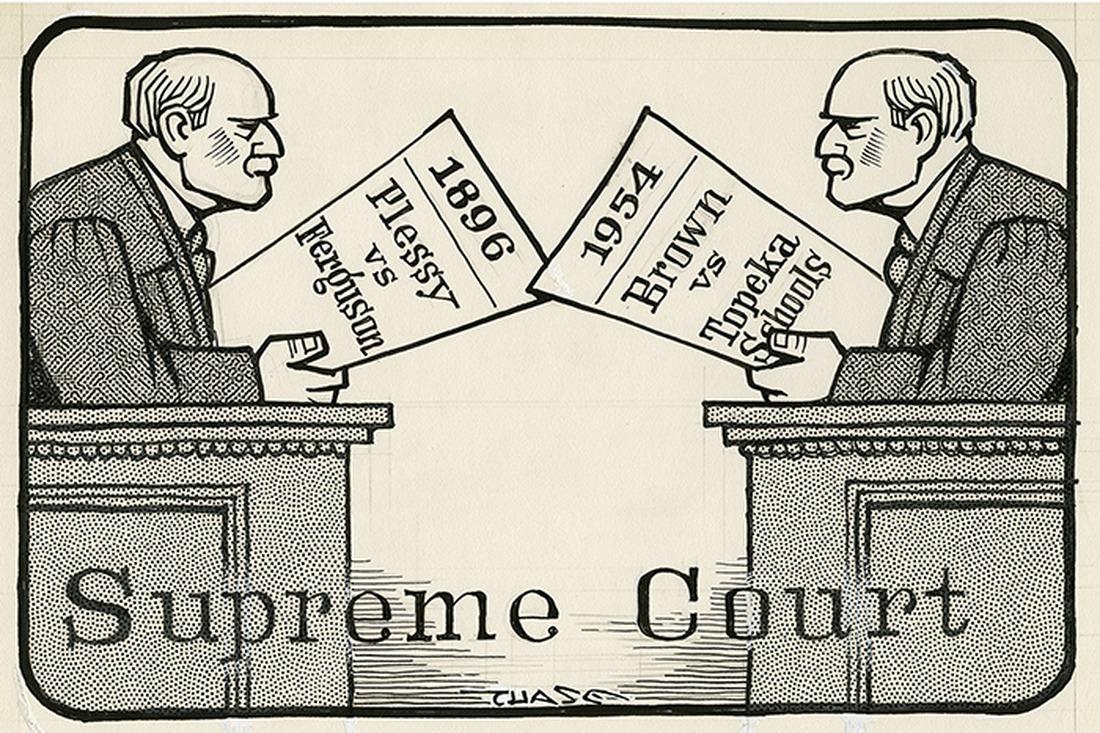
Plessy v. Ferguson, decided by the United States Supreme Court in 1896, is one of the most infamous and consequential decisions in American constitutional history. The ruling — which established the ‘separate but equal’ doctrine — provided the legal foundation for racial segregation across the American South for nearly six decades, until it was finally overturned by Brown v. Board of Education in 1954. Understanding the Plessy v. Ferguson case is essential to understanding the development of American civil rights law, the evolution of Equal Protection jurisprudence under the Fourteenth Amendment, and the role the Supreme Court has played in both entrenching and dismantling racial discrimination in the United States.
Case Overview at a Glance
| Full Case Name | Plessy v. Ferguson, 163 U.S. 537 (1896) |
|---|---|
| Court | Supreme Court of the United States |
| Date Decided | May 18, 1896 |
| Citation | 163 U.S. 537; 16 S. Ct. 1138; 41 L. Ed. 256 |
| Vote | 7-1 in favor of Ferguson (upholding the Louisiana Separate Car Act) |
| Authoring Justice | Justice Henry Billings Brown (majority opinion) |
| Dissenting Justice | Justice John Marshall Harlan (the lone dissenter) |
| Overturned By | Brown v. Board of Education, 347 U.S. 483 (1954) |
Background of Plessy v. Ferguson
Post-Civil War America and the Reconstruction Era
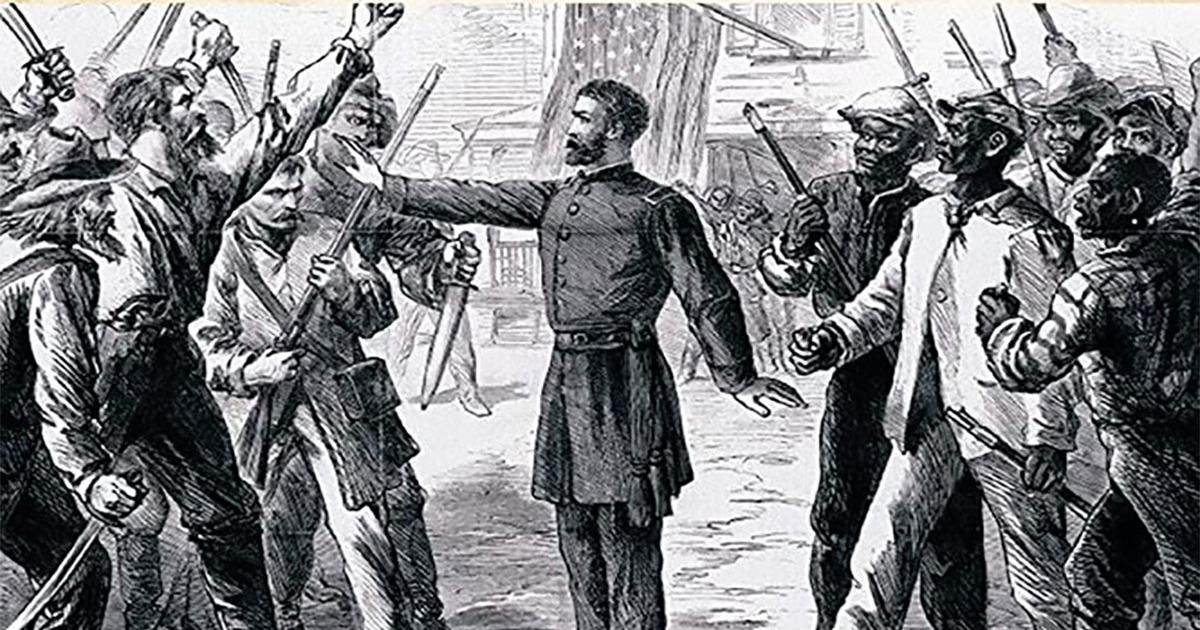
To understand what caused Plessy v. Ferguson and why it arose, it is essential to understand the broader historical context. The Civil War ended in 1865, and the Reconstruction Amendments — the Thirteenth (abolishing slavery), Fourteenth (guaranteeing equal protection and due process), and Fifteenth (prohibiting denial of voting rights based on race) — were ratified between 1865 and 1870. The Reconstruction era brought significant advances in civil rights for Black Americans, including the Civil Rights Act of 1875, which prohibited racial discrimination in public accommodations.
However, Reconstruction was short-lived. By the 1870s and 1880s, federal enforcement of civil rights laws in the South had largely collapsed. In 1883, the Supreme Court struck down the Civil Rights Act of 1875 in the Civil Rights Cases, holding that the Fourteenth Amendment only prohibited state-sponsored discrimination, not private discrimination. Southern states responded to the end of Reconstruction by enacting a wave of racially discriminatory legislation — the so-called Jim Crow laws — that mandated racial segregation across virtually every aspect of public life.
The Louisiana Separate Car Act of 1890
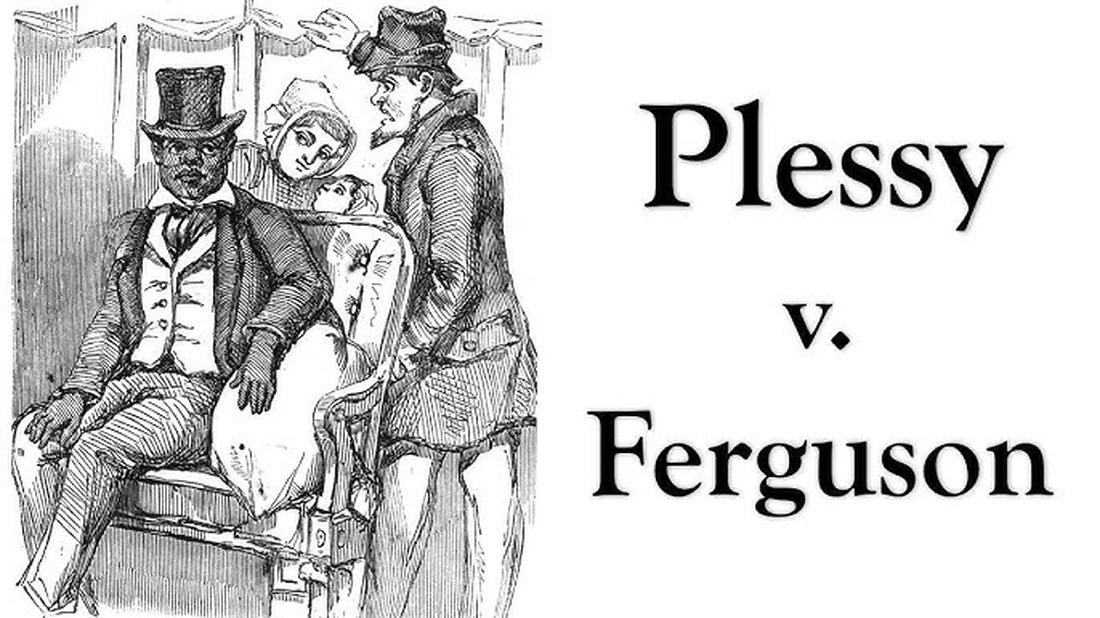
In 1890, Louisiana enacted the Separate Car Act, which required railroad companies operating in the state to provide ‘equal but separate accommodations for the white and colored races’ on passenger trains. Violation of the act by passengers was a criminal offense punishable by a fine of $25 or up to 20 days in jail. The law was part of a broader effort by Southern states to institutionalize racial separation following the end of Reconstruction.
The Organized Test Case
A group of New Orleans citizens — Black and mixed-race activists and community leaders — deliberately organized a legal challenge to the Separate Car Act. They recruited Homer Plessy, a man who was seven-eighths white and one-eighth Black (and therefore legally classified as ‘colored’ under Louisiana law), to purchase a first-class railroad ticket and intentionally sit in a car reserved for white passengers on the East Louisiana Railroad. On June 7, 1892, Plessy sat in the white car, was asked to move, refused, and was arrested.
The Parties
Homer Adolph Plessy — Plaintiff in Error
Homer Plessy was a shoemaker from New Orleans, a member of the Citizens’ Committee — a civil rights organization — and the deliberately chosen plaintiff for the test case. His mixed-race appearance was strategically significant: the activists hoped his near-white appearance would highlight the absurdity and arbitrariness of racial classification laws.
John H. Ferguson — Defendant in Error
John H. Ferguson was the judge of the Criminal District Court of New Orleans who presided over Plessy’s criminal case and ruled against him, upholding the constitutionality of the Separate Car Act. His name became attached to the case as it traveled through the Louisiana courts and ultimately to the US Supreme Court.
Counsel for Plessy
Plessy was represented by Albion Tourgee, a prominent civil rights attorney, novelist, and former federal judge who had dedicated his post-Civil War career to fighting racial discrimination. Tourgee argued the case pro bono before the Supreme Court.
Constitutional Issue in Plessy v. Ferguson
The central constitutional question in Plessy v. Ferguson was whether the Louisiana Separate Car Act violated the Fourteenth Amendment to the United States Constitution. The Fourteenth Amendment, ratified in 1868, provides in its Equal Protection Clause that no state shall ‘deny to any person within its jurisdiction the equal protection of the laws.’ Plessy’s counsel argued that state-mandated racial segregation was inherently unequal and therefore unconstitutional.
A secondary constitutional argument was raised under the Thirteenth Amendment, which abolished slavery and involuntary servitude. Plessy’s attorneys contended that forced racial segregation imposed a badge of inferiority and servitude on Black Americans, amounting to a continuing form of the slavery the Thirteenth Amendment was designed to eradicate.
Arguments of the Parties
Arguments for Plessy
Albion Tourgee argued that racial segregation by law stigmatized Black Americans as inferior and created a caste system inconsistent with the constitutional guarantees of equal citizenship established by the Reconstruction Amendments. He contended that the Fourteenth Amendment’s Equal Protection Clause prohibited states from making racial distinctions that imposed inferior legal status on any group of citizens. Tourgee further argued that the assignment of passengers to racially segregated cars was inherently unequal because it was based on an arbitrary and humiliating racial classification.
Arguments for Ferguson (Louisiana)
The State of Louisiana argued that the Separate Car Act was a legitimate exercise of the state’s police power to regulate public order and social relations, and that providing ‘separate but equal’ facilities satisfied the constitutional requirement of equal treatment under the law. The state contended that physical separation of the races did not imply the inferiority of either race and was simply a reasonable regulation of social interactions.
The Supreme Court’s Decision and Ruling
Majority Opinion — Justice Henry Billings Brown
On May 18, 1896, the Supreme Court issued its decision in Plessy v. Ferguson, ruling 7-1 against Homer Plessy and upholding the constitutionality of the Louisiana Separate Car Act. Justice Henry Billings Brown authored the majority opinion, which established the ‘separate but equal’ doctrine that would govern American racial jurisprudence for the next 58 years.
The majority held that the Fourteenth Amendment’s Equal Protection Clause was intended to enforce the absolute equality of the races before the law but not to abolish distinctions based upon color, or to enforce social, as distinguished from political equality, or a commingling of the two races upon terms unsatisfactory to either. In other words, the Court drew a sharp distinction between legal or political equality (which the amendment guaranteed) and social equality (which the state could regulate).
The majority rejected the argument that racial segregation imposed a badge of inferiority on Black Americans, reasoning that if this be so, it is not by reason of anything found in the act, but solely because the colored race chooses to put that construction upon it. This reasoning — placing responsibility for the psychological harm of segregation on the people being segregated rather than on the state imposing the segregation — would be directly refuted by the Supreme Court in Brown v. Board of Education 58 years later.
The ‘Separate But Equal’ Doctrine
The Plessy decision established the ‘separate but equal’ doctrine: the proposition that state-mandated racial segregation was constitutionally permissible as long as the separate facilities provided to different racial groups were nominally equal in quality. In practice, this doctrine served as the legal cornerstone of the entire Jim Crow system — justifying racially segregated schools, hospitals, transportation, restaurants, hotels, courtrooms, and virtually every other domain of public life across the American South.
The Dissent: Justice John Marshall Harlan
Justice John Marshall Harlan — a former slaveholder from Kentucky — cast the lone dissent in Plessy v. Ferguson. His dissenting opinion is widely regarded as one of the most prophetic and morally courageous opinions in the history of the Supreme Court.
Harlan argued that the Louisiana statute was inconsistent with the personal liberty of citizens, white and black, in that State, and hostile to both the spirit and letter of the Constitution of the United States. He rejected the majority’s reasoning as a thin disguise for institutionalized racial oppression and declared that our Constitution is color-blind, and neither knows nor tolerates classes among citizens. In respect of civil rights, all citizens are equal before the law.
Harlan predicted that the decision would prove to be quite as pernicious as the decision made by this tribunal in the Dred Scott Case — a prescient warning that proved accurate. He also warned that the decision would stimulate aggressions, more or less brutal and irritating, upon the admitted rights of colored citizens — which is precisely what the Jim Crow era delivered.
Who Won Plessy v. Ferguson?
Ferguson — the State of Louisiana — won the Plessy v. Ferguson case. The Supreme Court’s 7-1 ruling upheld the Louisiana Separate Car Act and affirmed the constitutionality of racial segregation under the ‘separate but equal’ doctrine. Homer Plessy lost his legal challenge. In terms of immediate practical outcome, Plessy was found guilty of violating the Separate Car Act and paid a $25 fine to resolve the criminal case.
However, in the broader sweep of history, the Plessy decision is universally regarded as one of the Supreme Court’s greatest moral and constitutional failures — a ruling that betrayed the promise of the Reconstruction Amendments and provided constitutional cover for nearly six decades of institutionalized racial oppression.
Significance of Plessy v. Ferguson
Entrenchment of Jim Crow Laws
The Plessy decision’s most immediate and devastating consequence was the constitutional legitimization of the entire Jim Crow system. Armed with the Supreme Court’s endorsement of ‘separate but equal,’ Southern states enacted and enforced comprehensive segregation across every domain of public life. These laws were enforced not merely by legal sanction but by the constant threat of racial violence, including lynching.
Impact on Black Americans
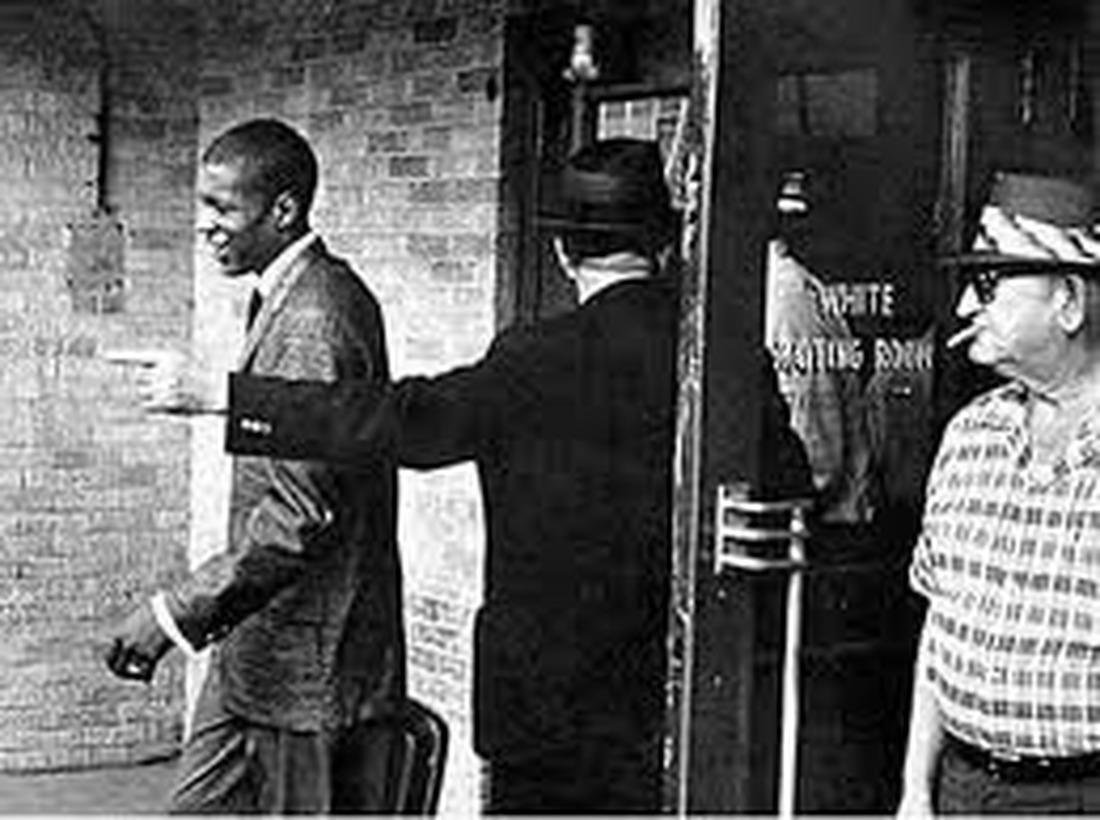
The practical impact of Plessy v. Ferguson on African American life was immense and devastating. Segregated schools were dramatically underfunded compared to white schools. Segregated hospitals provided inferior care. Black Americans were relegated to the worst seats on public transportation, the worst facilities in public spaces, and systematically excluded from full participation in economic and civic life. The psychological harm caused by legally mandated segregation — later documented by the social science research cited in Brown v. Board — inflicted lasting damage on generations of Black Americans.
The Long Road to Overturning Plessy
Legal challenges to the Plessy doctrine began in earnest in the 1930s and 1940s, led primarily by the NAACP Legal Defense and Educational Fund under the leadership of Thurgood Marshall. The NAACP’s strategy was initially to attack the ‘equal’ component of ‘separate but equal’ — demonstrating that segregated facilities were in practice never truly equal. This strategy achieved notable successes in cases like Missouri ex rel. Gaines v. Canada (1938), Sweatt v. Painter (1950), and McLaurin v. Oklahoma State Regents (1950), which chipped away at segregation in graduate and professional education.
When Was Plessy v. Ferguson Overturned?
Plessy v. Ferguson was overturned on May 17, 1954, when the Supreme Court issued its unanimous decision in Brown v. Board of Education of Topeka, 347 U.S. 483 (1954). The Brown decision was authored by Chief Justice Earl Warren and ruled that separate educational facilities are inherently unequal — directly repudiating the core premise of Plessy.
What Case Overturned Plessy v. Ferguson?
Brown v. Board of Education (1954) is the case that overturned Plessy v. Ferguson. The Warren Court drew on the social science research of psychologist Kenneth Clark, whose famous ‘doll tests’ demonstrated the devastating psychological effects of segregation on Black children. The Court held that the Equal Protection Clause of the Fourteenth Amendment prohibited racial segregation in public schools, effectively repudiating the ‘separate but equal’ doctrine.
While Brown specifically addressed public education, its reasoning — that legally mandated separation based on race is inherently unequal and constitutionally impermissible — provided the foundation for subsequent desegregation across all areas of public life, culminating in the Civil Rights Act of 1964 and the Voting Rights Act of 1965.
Key Takeaways
- Plessy v. Ferguson (1896) established the ‘separate but equal’ doctrine, holding that racial segregation mandated by state law did not violate the Fourteenth Amendment’s Equal Protection Clause.
- The 7-1 decision provided constitutional cover for the entire Jim Crow system of racial segregation that dominated the American South for nearly six decades.
- Justice John Marshall Harlan’s lone dissent declared the Constitution to be ‘color-blind’ and predicted the decision’s harmful consequences with remarkable accuracy.
- Plessy v. Ferguson was overturned by Brown v. Board of Education in 1954, which held that separate educational facilities are inherently unequal.
- The case remains a foundational study in constitutional law, illustrating how the Supreme Court can both ratify and ultimately correct profound constitutional errors.
References & Further Reading
- Plessy v. Ferguson, 163 U.S. 537 (1896)
- Brown v. Board of Education, 347 U.S. 483 (1954)
- U.S. Constitution, Amendments XIII, XIV, XV
- Civil Rights Cases, 109 U.S. 3 (1883)
- Sweatt v. Painter, 339 U.S. 629 (1950)
- McLaurin v. Oklahoma State Regents, 339 U.S. 637 (1950)