Is Pleading the Fifth an Admission of Guilt?
 Moona Satti03··7 min read·Criminal Law
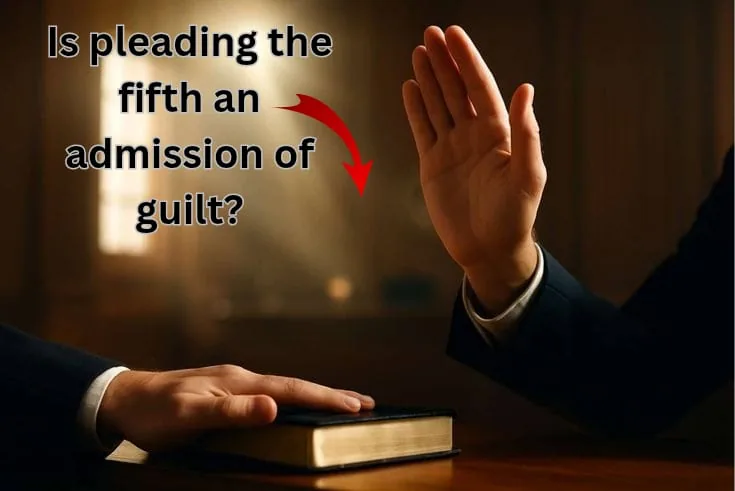
If you're wondering is pleading the Fifth an admission of guilt, the answer is no. Invoking the Fifth Amendment is a constitutional right that protects individuals from being forced to provide testimony that could incriminate them. Choosing to remain silent does not automatically mean someone is guilty, and the law does not treat it as a confession.
What Does Pleading the Fifth Mean?
The phrase "pleading the Fifth" comes from the Fifth Amendment to the United States Constitution. It gives people the right to refuse to answer questions if their answers could be used against them in a criminal case.
When someone pleads the Fifth, they are exercising the privilege against self-incrimination. Instead of answering a question that could expose them to criminal charges, they choose to remain silent.
Many people think this right is only available to defendants during a criminal trial, but that is not true. Depending on the circumstances, witnesses and other individuals involved in legal proceedings may also invoke the Fifth Amendment when answering a question could place them at risk of criminal prosecution.
The Fifth Amendment exists to protect constitutional rights and ensure that the government cannot force someone to provide evidence against themselves. It is one of the most important legal protections in the American justice system.
Although the phrase "pleading the Fifth" is widely used in everyday conversations, it has a specific legal purpose. It is not designed to help guilty people avoid responsibility. Instead, it protects everyone, including innocent individuals, from being compelled to give self-incriminating testimony.
Is Pleading the Fifth an Admission of Guilt?
No. Pleading the Fifth is not an admission of guilt.
A person who invokes the Fifth Amendment is simply choosing not to answer a question that could potentially be used against them in a criminal investigation or criminal trial. They are exercising a constitutional protection not admitting they committed a crime.
This distinction is important because many people misunderstand what remaining silent actually means.
Imagine a witness is asked a question during a legal proceeding, and the answer could expose them to criminal liability. Even if that person has not committed a crime, they may still choose to invoke the Fifth Amendment to avoid providing information that could later be misunderstood or taken out of context.
The law recognizes that people should not be forced to choose between answering a potentially incriminating question and protecting themselves from prosecution.
Because of this protection, courts generally do not treat pleading the Fifth as a confession of guilt in criminal cases.
Public opinion, however, can be very different. Television shows, movies, and news reports sometimes create the impression that only guilty people refuse to answer questions. In reality, attorneys often advise clients to remain silent for many legitimate legal reasons, regardless of whether they are guilty or innocent.
Why Does the Fifth Amendment Exist?
The Fifth Amendment was created to protect individuals from being forced to incriminate themselves.
Before these constitutional protections existed, people could be pressured into making statements that were later used against them in court. The Fifth Amendment helps prevent that by giving individuals the right to refuse to answer questions that could lead to criminal prosecution.
This protection supports several important principles within the criminal justice system.
First, the government has the burden of proving criminal charges. A defendant is not required to help prosecutors build their case.
Second, every person is presumed innocent until proven guilty. Exercising a constitutional right should never replace the government's responsibility to present evidence.
Finally, the Fifth Amendment encourages fairness throughout legal proceedings. It recognizes that statements made under pressure, confusion, or fear may not always reflect the truth.
These protections benefit everyone. Even people who have done nothing wrong may unknowingly provide inaccurate or incomplete answers during police questioning or courtroom testimony. By allowing individuals to remain silent when appropriate, the Constitution helps protect the integrity of the legal process.
When Can Someone Plead the Fifth?
Many people believe they can only plead the Fifth during a criminal trial. In reality, the privilege against self-incrimination applies in several legal situations.
If you've been served court papers, it's important to understand your legal rights before answering questions or responding in court.
For example, someone may choose to remain silent during:
A criminal investigation.
Police questioning.
Court testimony.
A deposition.
Grand jury proceedings.
Certain civil cases where answers could later be used in a criminal prosecution.
The important factor is not where the question is asked but whether the answer could be self-incriminating.
At the same time, the Fifth Amendment is not a blanket right to refuse every question. A person cannot simply invoke it because a question is uncomfortable or embarrassing. There must be a genuine possibility that the response could contribute to criminal liability.
Because these situations can be legally complex, many individuals choose to consult a criminal defense lawyer before answering questions during official legal proceedings.
Who Can Invoke the Fifth Amendment?
Another common misconception is that only criminal defendants can rely on the Fifth Amendment.
In fact, anyone whose truthful answer could expose them to criminal prosecution may be able to invoke this constitutional right.
Depending on the circumstances, this may include:
A criminal defendant.
A witness in a criminal case.
A witness in a civil lawsuit.
Someone questioned by law enforcement.
A person testifying before a grand jury.
For example, imagine a witness is called to testify in someone else's criminal trial. If answering a particular question could expose the witness to criminal charges, they may have the right to invoke the Fifth Amendment instead of responding.
This is one reason pleading the Fifth should never be viewed as an automatic sign of guilt. The privilege exists to protect constitutional rights, not to determine whether someone committed a crime.
Every situation is different, and the availability of the privilege depends on the specific facts and legal issues involved.
Does Pleading the Fifth Make You Look Guilty?
One of the biggest reasons people hesitate to invoke the Fifth Amendment is the fear that others will assume they have something to hide. While that reaction may happen in everyday life, the legal system works differently.
In a criminal case, pleading the Fifth is a constitutional right. A person should not be treated as guilty simply because they choose not to answer questions that could be self-incriminating. The prosecution must still prove every element of the case using evidence, witness testimony, and other admissible proof.
Public opinion and legal standards are not always the same. Someone watching a news story or courtroom drama may assume that remaining silent means a person is guilty. However, experienced attorneys know that there are many legitimate reasons for invoking the Fifth Amendment, even when a person has done nothing wrong.
For example, an innocent person may worry that an answer could be misunderstood or taken out of context. In other situations, a person may not remember important details accurately. Rather than risk making a statement that could later be used against them, they may choose to exercise their constitutional rights.
The law protects this decision because it recognizes that silence is not the same as an admission of guilt.
Can a Jury Assume You Are Guilty for Pleading the Fifth?
In a criminal trial, the answer is generally no.
A defendant's decision to invoke the Fifth Amendment cannot be used as proof that they committed a crime. The burden remains on the prosecution to establish guilt beyond a reasonable doubt.
This protection is one of the cornerstones of the American criminal justice system. Every defendant is presumed innocent unless the government proves otherwise through legally admissible evidence.
However, the rules can be different in certain civil cases.
Unlike criminal proceedings, some civil courts may allow an adverse inference when a person invokes the Fifth Amendment. In simple terms, this means the judge or jury may, in limited situations, consider the refusal to answer questions when evaluating the evidence. Even then, the outcome depends on the facts of the case and the applicable law.
This difference often causes confusion. Many people assume the same rules apply in every courtroom, but criminal and civil cases have different legal standards and purposes.
Does the Fifth Amendment Apply During Police Questioning?
Yes, but understanding how it works is important.
The Fifth Amendment protects individuals from being compelled to provide self-incriminating statements during police questioning. This protection is closely connected to the well-known Miranda rights, which inform individuals that they have the right to remain silent and the right to an attorney.
If a person is questioned by law enforcement and believes their answers could be used against them, they may choose to remain silent and request legal counsel.
Remaining silent during police questioning is not an admission of guilt. Instead, it is the exercise of a constitutional protection designed to ensure fairness during a criminal investigation.
It is also important to understand that simply staying quiet is not always enough. Depending on the circumstances, a person may need to clearly state that they are invoking their right to remain silent or requesting an attorney before questioning should stop.
Because every situation is unique, individuals facing police questioning should understand their rights before making statements that could affect a future criminal case.
Can You Plead the Fifth in a Civil Case?
Yes. Although the Fifth Amendment is most commonly associated with criminal cases, it may also apply in certain civil proceedings.
For example, a witness or party in a civil lawsuit may refuse to answer questions if those answers could expose them to criminal prosecution later.
Imagine a civil fraud case where answering a question could also provide evidence of a possible criminal offense. In that situation, the individual may invoke the privilege against self-incrimination rather than provide testimony that could later be used by prosecutors.
While this protection exists in civil cases, the legal consequences may differ from those in criminal court. As mentioned earlier, some civil courts may permit an adverse inference based on a person's decision to invoke the Fifth Amendment.
This is why legal advice is especially important whenever criminal and civil matters overlap.
Common Misconceptions About Pleading the Fifth
There are many misunderstandings about pleading the Fifth, and these myths often lead people to believe it is something only guilty individuals do.
One common misconception is that invoking the Fifth Amendment is the same as confessing to a crime. In reality, it simply means a person is exercising a constitutional right against self-incrimination.
Another myth is that only defendants can plead the Fifth. As discussed earlier, witnesses and other individuals involved in legal proceedings may also invoke this protection if their testimony could expose them to criminal liability.
Some people also believe that the Fifth Amendment allows someone to refuse every question they are asked. That is not correct. The privilege generally applies only when answering a specific question could reasonably lead to self-incrimination.
Another misunderstanding is that remaining silent prevents an investigation from moving forward. Law enforcement officers and prosecutors can still continue gathering evidence, interviewing witnesses, and building a case using information obtained through lawful means.
Finally, many people think exercising the Fifth Amendment makes them appear uncooperative. While others may form personal opinions, the Constitution protects this right because preserving fairness in the legal system is more important than public perception.
Why Is Legal Advice Important Before Invoking the Fifth?
Although the Fifth Amendment provides powerful constitutional protections, deciding when and how to invoke it is not always straightforward.
Every legal situation is different. The questions being asked, the stage of the investigation, and whether the matter involves criminal or civil proceedings can all affect how the privilege applies.
An attorney can explain your rights, evaluate whether answering a question could create legal risks, and help you avoid unintentionally waiving important constitutional protections.
In some situations, providing an answer may have no legal consequences. In others, even a seemingly harmless statement could become evidence in a criminal investigation.
Understanding these differences can help individuals make informed decisions while protecting their legal rights throughout the process.
FAQs
Can innocent people plead the Fifth?
Yes. One of the biggest misconceptions about the Fifth Amendment is that only guilty people invoke it. In reality, innocent people may plead the Fifth to avoid answering questions that could be misunderstood or used against them during a criminal investigation. Exercising this constitutional right is not an admission of wrongdoing.
Is pleading the Fifth an admission of guilt in court?
No. Pleading the Fifth is not an admission of guilt. It is a constitutional protection against self-incrimination. In a criminal case, a defendant's decision to invoke the Fifth Amendment cannot be treated as proof that they committed a crime.
Can a witness plead the Fifth?
Yes. A witness may invoke the Fifth Amendment if answering a question could expose them to criminal liability. This protection is available to more than just criminal defendants and may apply in both criminal and certain civil proceedings.
Can you plead the Fifth during a police investigation?
Yes. If law enforcement officers ask questions that could lead to self-incrimination, you may have the right to remain silent under the Fifth Amendment. Many people also choose to request an attorney before answering questions during a criminal investigation.
Does pleading the Fifth stop a criminal investigation?
No. Invoking the Fifth Amendment does not prevent police or prosecutors from continuing their investigation. Law enforcement may still gather evidence, interview witnesses, review documents, and pursue the case using other lawful methods.
Can you plead the Fifth in a civil lawsuit?
Yes. In some civil cases, an individual may invoke the privilege against self-incrimination if answering a question could expose them to criminal prosecution. However, unlike criminal cases, a civil court may be allowed to draw certain adverse inferences depending on the circumstances and applicable law.
Is pleading the Fifth the same as remaining silent?
The two concepts are closely related but not identical. Pleading the Fifth refers to invoking the constitutional privilege against self-incrimination. Remaining silent may be one way of exercising that right, particularly during police questioning or courtroom testimony.
Conclusion
If you've been asking is pleading the Fifth an admission of guilt, the answer is clear: no. Invoking the Fifth Amendment is a constitutional right that protects individuals from being forced to provide testimony that could be used against them in a criminal case. Choosing to remain silent is not a confession, nor does it relieve the prosecution of its responsibility to prove guilt beyond a reasonable doubt.
Whether you are involved in a criminal investigation, called as a witness, or participating in a civil proceeding, understanding your constitutional rights is essential. Because every legal situation is unique, knowing when and how the privilege against self-incrimination applies can make a significant difference.
At The Law Lion, we're committed to making legal topics easier to understand. Explore our growing library of legal resources to learn more about Staying informed can help you better understand the legal system and make confident decisions when legal questions arise.